Synergy VPP & DEBS Explained: Is a VPP Worth It in Albany?
The WA battery rebate requires you to join a Virtual Power Plant. Here is what a VPP really involves, what Synergy’s DEBS feed-in tariff pays in 2026, and whether it is worth it for an Albany or Great Southern home.
The Quick Answer
If you are buying a battery anyway, joining a VPP is usually worth it. It unlocks the WA Residential Battery Scheme rebate of up to $1,300 and the no-interest loan. Synergy’s Battery Rewards VPP then pays 70c per kWh exported during events, for a two-year term and up to 30 events a year. Outside events, the battery is yours to control.
- $1,300: WA rebate you unlock by joining a VPP
- 70c: per kWh paid during Synergy VPP events
- 2 years: initial term, up to 30 events a year
- 10c / 2c: DEBS peak and off-peak feed-in rates
Is a VPP Worth It in WA? An Honest Answer
The ongoing VPP credits are modest. The real prize is what joining unlocks: the WA battery rebate and the no-interest loan. Here is what the numbers look like for a typical 10kWh battery.
| Item | How it works | Example value |
|---|---|---|
| WA battery rebate | $130 per usable kWh, capped at 10kWh. Paid once, and only if you join a VPP. | $1,300 |
| Event credits | 70c per kWh exported during events. Example: 30 events a year at 8kWh each. | Up to $168 a year |
| Energy you give up | If sun refills the battery, it costs about 2c per kWh in lost exports. If you re-buy it from the grid, it costs 33.26c per kWh. | About $5 to $80 a year |
| Net yearly VPP benefit | Event credits minus the energy you gave up | About $90–$165 a year |
| First two years | Rebate plus two years of net credits | Roughly $1,480–$1,630 |
Illustrative only. Real results depend on how many events Synergy calls, how full your battery is at the time and your tariff. The federal battery rebate and DEBS credits are separate from these figures.
Which of these sounds like you?
I am buying a new battery
I already have a battery
I rely on my battery for blackout backup
My internet is patchy
I might move in the next two years
What Is a Virtual Power Plant (VPP)?
A VPP links thousands of home batteries so the grid can draw on them together when demand peaks. Think of it as a power station built from household batteries. Here is how Synergy’s Battery Rewards VPP works.
Your battery connects
Your installer enrols an approved battery in the VPP and connects it to the internet. Synergy’s Battery Rewards is linked to the WA Residential Battery Scheme.
Synergy watches for peak demand
When the grid is stretched, such as on a very hot or very cold day, Synergy can call an activation event. There are no more than 30 a year. You get about a two-hour standby window beforehand.
Your battery exports for a few hours
Most events run two to three hours and can run up to four. Your stored energy goes to the grid. Synergy decides when events happen, and you cannot pick which ones to join.
You are paid on top of DEBS
You earn 70c for each kWh exported during the event. These Battery Rewards credits are paid over and above any DEBS credits.
Not sure which VPP suits you?
We compare Synergy’s Battery Rewards with other WA Government-listed VPP products and explain the exit terms in plain English, free.Request a free VPP check →
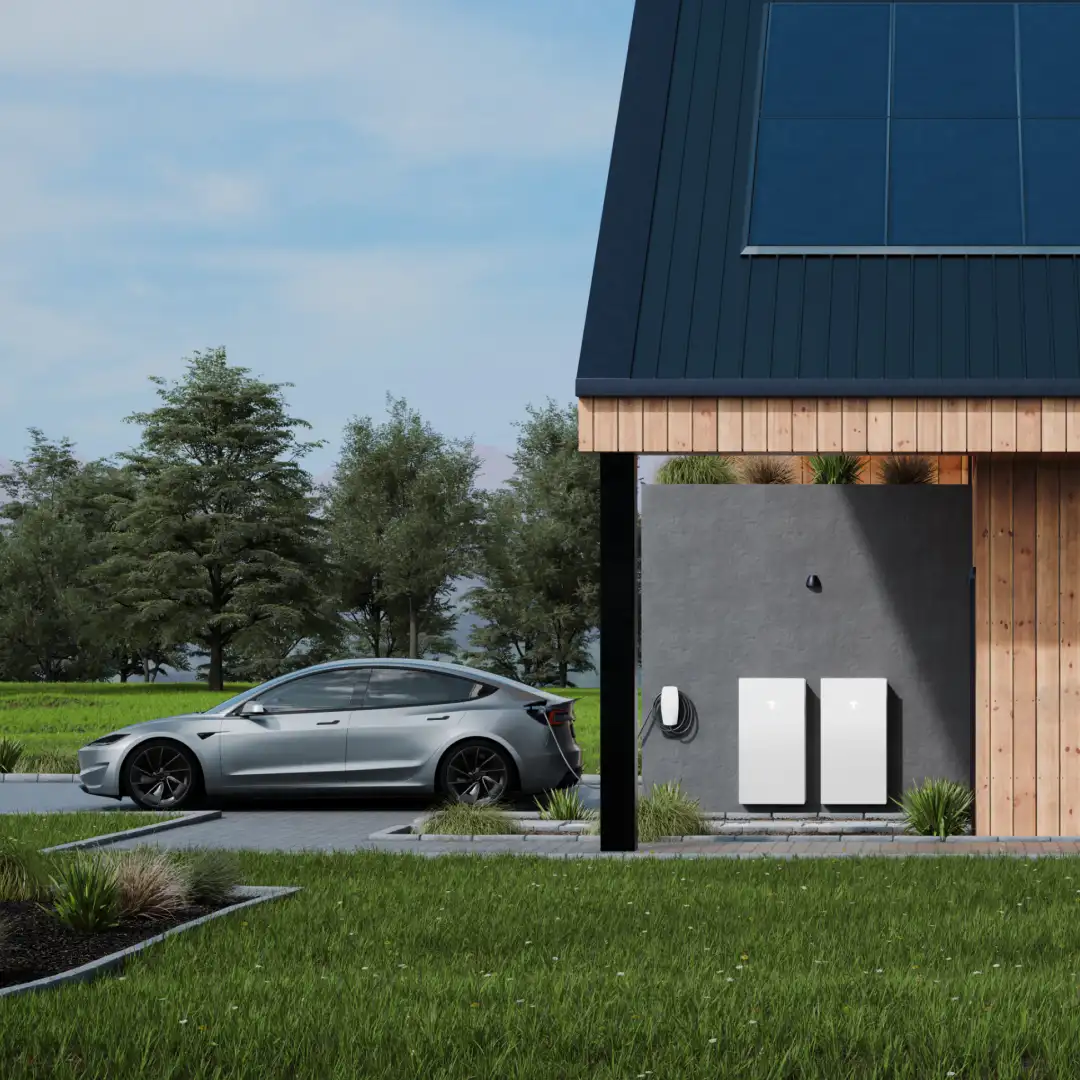
Synergy Battery Rewards at a Glance
| Who can join | Synergy residential customers with a compatible battery installed through the WA Residential Battery Scheme |
|---|---|
| Reward | 70c per kWh exported during an activation event |
| Number of events | No more than 30 a year. Short test events happen from time to time and do not count towards the cap. |
| Event length | Most run two to three hours and can run up to four |
| Warning | About a two-hour standby window before an event |
| Your control | Synergy decides when events happen. Outside events, you keep full control of the battery. |
| Contract | Two-year initial term |
| Leaving | During the first two years, only if you no longer live at the property or need life-support equipment. After that, at any time with at least 20 business days’ notice. |
| DEBS | Battery Rewards credits stack on top of your DEBS feed-in credits |
| Internet | A continuous connection is required |
Synergy customers can also choose an alternative VPP product that meets the WA Government’s criteria and is listed on the Energy Policy WA website. Rewards, event rules and exit terms differ, so compare them first.
Synergy DEBS Feed-In Tariff Explained (2026)
DEBS is the Distributed Energy Buyback Scheme. It is what Synergy pays you for solar, and for battery energy, that you export to the grid. The rate depends on the time of day.
- Peak · 3pm to 9pm: 10cper kWh exported
- Off-peak · all other times: 2cper kWh exported
What is 1kWh from your battery worth?
- VPP event credit70c
- Use it at home (A1 rate)33.26c
- DEBS peak export10c
- DEBS off-peak export2c
Home Plan (A1) rate of 33.2621c per kWh, effective 1 July 2026. If you are on a time-of-use plan, your numbers will differ.
The takeaway: use your solar yourself first
Exporting 8kWh from your battery at the 10c peak rate earns about $0.80. Using the same 8kWh at home avoids about $2.66 of grid electricity. A battery is mainly a way to use your own solar at night, not to sell it. VPP events are the exception, because they pay 70c per kWh.
How DEBS shows up on your bill
Look for credit lines called Distributed Energy Buyback Peak and Distributed Energy Buyback Off Peak. Each shows the kWh exported and the rate in cents.
Good to know
- DEBS pays on up to 50kWh exported per premises per day
- DEBS now pays for energy exported from a battery as well as rooftop solar
- The WA Government reviews rates each year, usually from 1 July
- A one-off administration fee and metering costs may apply when you join
- On an older feed-in tariff? Check with Synergy before you upgrade your system, because changes can affect your buyback arrangement
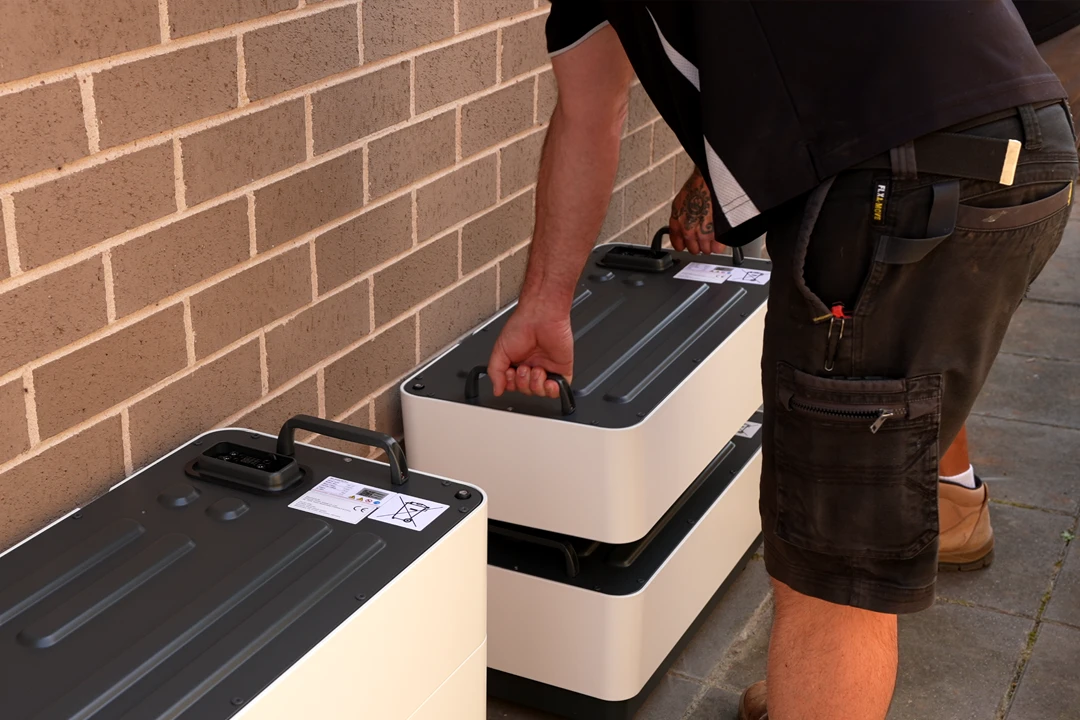
What a VPP Means for Albany and the Great Southern
Most guides are written for Perth. These local factors change the VPP decision for homes around Albany.
- You are a Synergy customer. Albany sits on the Synergy network, so the Synergy rates and the $130 per kWh WA rebate apply, not the Horizon Power regional rates.
- Storm season and backup. Winter fronts can cause outages on rural lines around Denmark, Walpole, Kendenup and Bremer Bay. Ask how your battery behaves during an event and keep a backup reserve if outages worry you.
- Connectivity. A VPP needs a constant internet connection. On a rural block, we check your coverage and options before you commit.
- Winter sun. A battery that is not full when an event starts exports less and earns less. A properly sized solar system matters. See our solar system size guide.
7 Questions to Ask Before You Join a VPP
- Is the battery on the approved list? It must meet the WA scheme and Synergy’s requirements to earn the rebate.
- How long is the contract? Synergy’s is two years. Check the exit rules, and what happens to your rebate and loan if you leave early.
- How many events, and how long? Synergy caps events at 30 a year.
- Does the battery keep a backup reserve during events? This varies by model and settings.
- What is paid, and how? Compare the per-kWh rate, caps and how credits reach you.
- Is your internet reliable enough? No connection, no VPP.
- What fees apply? Ask about metering costs and any one-off administration fee.
Your local VPP and rebate experts
Set up in Albany, supported in Albany
Albany Solar & Hot Water is a family-run, fully licensed electrical contractor (EC9265) based at our showroom on Sanford Road. Since 2010 we have designed solar and battery systems for homes, farms and businesses across the Great Southern. We choose a battery that qualifies, size it to your night-time use and handle the paperwork.
- Free rebate and VPP assessment
- Federal & WA rebates applied upfront
- VPP, Synergy & Western Power paperwork handled
- Compare Sungrow and Tesla Powerwall 3
- Local battery servicing and repairs
Not Sure a VPP Is Right for You? Get a Free Check
Send us your power bill and we will show your combined federal and WA rebate, explain the VPP terms in plain English and give you a fixed quote with no surprises.
OR CALL US ON
Synergy VPP & DEBS: Frequently Asked Questions
Is a VPP worth it in WA?
If you are buying a battery anyway, usually yes. Joining a VPP unlocks the WA Residential Battery Scheme rebate of $130 per kWh (up to $1,300) and the no-interest loan, and Synergy Battery Rewards pays 70c per kWh exported during events. The ongoing credits are modest, roughly $90 to $165 a year in our worked example, so the main value is the upfront rebate. The trade-offs are a two-year commitment, up to 30 events a year and the need for a constant internet connection.
What is the Synergy DEBS feed-in tariff in 2026?
As at 1 July 2026, Synergy’s DEBS pays 10c per kWh for electricity exported between 3pm and 9pm and 2c per kWh at all other times, on up to 50kWh of exports per day. The WA Government sets the rates and reviews them each year. They were unchanged on 1 July 2026. DEBS also pays for energy exported from a battery.
Do I have to join a VPP to get a battery rebate?
The WA Residential Battery Scheme requires you to join an approved VPP to receive its rebate and loan. The federal Cheaper Home Batteries Program requires the battery to be VPP-capable but does not require you to join one. If you skip the VPP, you can still claim the federal discount on a qualifying battery, but you give up the WA rebate of up to $1,300 and the loan.
How much can I earn from Synergy Battery Rewards?
Synergy pays 70c for each kWh your battery exports during an activation event, on top of DEBS. With up to 30 events a year and, for example, 8kWh exported per event, that is up to about $168 a year before allowing for the energy you gave up. Your result depends on how many events occur and how much charge your battery holds when one starts.
Can I leave a VPP early?
During Synergy’s two-year initial term you can opt out only if you no longer live at the property or need life-support equipment there. After two years you can leave at any time with at least 20 business days’ notice. Leaving early may put your rebate and loan terms at risk, so read the contract before you sign.
Will a VPP drain my battery before a storm or blackout?
Outside events you keep full control of the battery. Events are most likely on peak-demand days, and Synergy gives about a two-hour standby window beforehand. Whether a backup reserve is kept during an event depends on the battery and its settings, so we confirm this in writing for your model before installation.
Do I still get DEBS if I have a battery?
Yes. DEBS pays the same time-based rates for battery exports as it does for solar exports. Synergy says Battery Rewards credits are paid over and above DEBS credits, so the two stack.
Can I choose a VPP other than Synergy's?
Synergy customers can choose Synergy’s Battery Rewards or an alternative VPP product that meets the WA Government’s criteria and is listed on the Energy Policy WA website. Rewards, event rules and exit terms differ, so compare them before you choose.
Is it better to export battery energy at 10c or use it at home?
Using it at home is usually worth far more. At the 1 July 2026 Home Plan (A1) rate of 33.26c per kWh, each kWh used at home avoids 33.26c, while exporting earns 10c at best under peak DEBS. The exception is a VPP event, which pays 70c per kWh.
Does a VPP battery need internet?
Yes. A VPP battery needs a continuous internet connection so the operator can monitor and control it. On rural blocks with patchy coverage, we check your connection options before you commit.





